
Guide · Customer experience
How to improve service CSI and CXI scores, starting at booking
The short answer
The complaint behind most low service CSI and CXI scores is lack of communication. One thing is worse than no communication: a surprise. The fix that works best starts before the customer arrives. When the BDC books the appointment, it explains what the customer’s day could look like, so the customer can pick a day that works for their schedule.
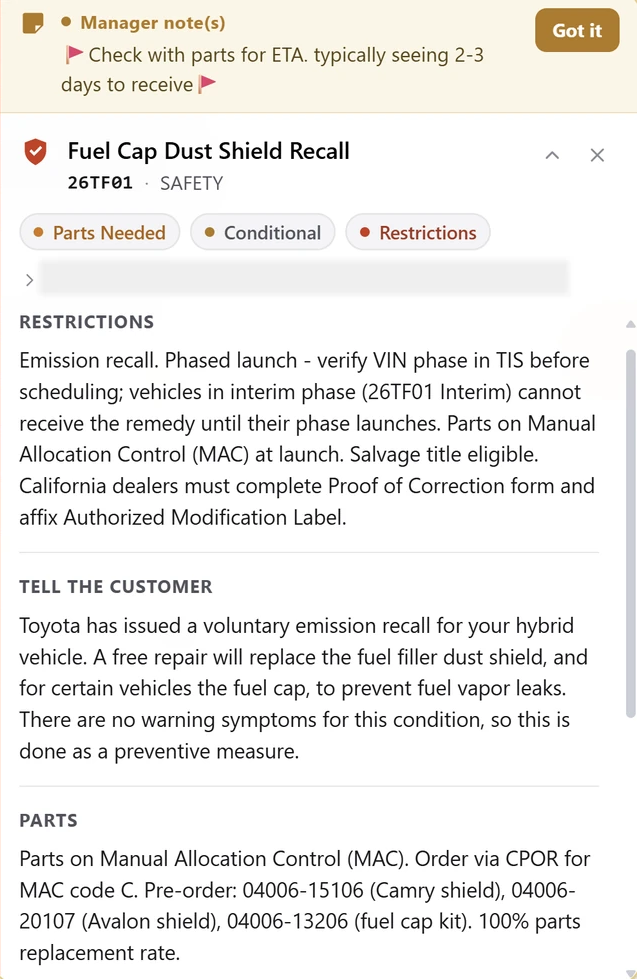
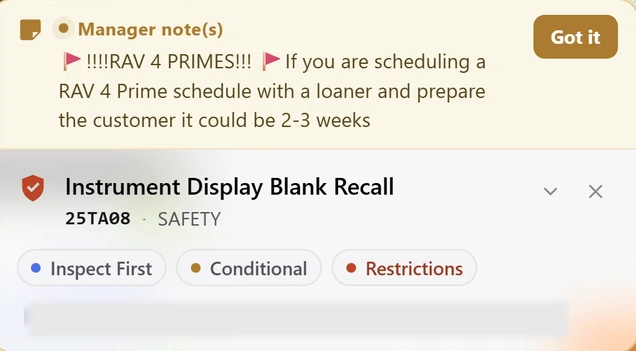
DealerNavi helps with that conversation. On the scheduling screen, it puts parts requirements, manager notes on timing and transportation, and campaign guidance in front of the BDC while the appointment is being booked.
Why surprises hurt more than silence
Picture a customer who shows up for their appointment and finds out at the counter that the car will not be ready until 5. They have to pick up their kids at 3. Nobody planned for it, and now the advisor has to deliver that news to a customer with no good options.
That is hard on the customer and hard on the advisor, and situations like it are common in service departments. The work can be done right and the survey still goes bad, because the customer’s day fell apart.
Three ways the same visit can go
A customer drops the car off in the morning, expecting to pick it up after work. The car needs an inspection, and depending on what it finds, the repair may take longer or need a second visit. How the customer feels about the visit depends on when they hear about that possibility.
| When the customer hears it | What happens | How the customer feels |
|---|---|---|
| In a call at work | The advisor calls to say the car will not be ready today. The customer can leave it overnight, or come get it and schedule a second appointment. | Blindsided. Their evening and tomorrow’s ride to work are now a problem. |
| At drop-off | A good advisor warns them at the counter: depending on the inspection, the car may not be ready today, or they may need to come back. | Better. They know it could happen, but they have already committed the day. |
| When they book | The BDC explains the possible outcomes before the appointment is set, so the customer can plan transportation and pick a day that fits. | Prepared. Whatever the inspection finds, it matches what they were told. |
Setting expectations at booking makes a good advisor’s job easier and makes an average advisor look better. The advisor greets a customer who already knows what the day could bring, instead of starting the relationship with bad news.
What the BDC should cover when booking
- How long the visit may take. Give a realistic time, not the best case, so the customer can decide whether to wait, arrange a ride or pick another day.
- What an inspection could change. If a campaign or repair depends on an inspection, explain that a failed inspection can mean the manufacturer has to release repair parts, and the customer may be without the vehicle for extra days or need a second appointment.
- Parts that have to be ordered first. Check whether parts need to be ordered or released before the work, and order eligible parts ahead where permitted, so the customer does not leave the car all day for work that cannot be finished.
- Transportation. Talk through the customer’s day without their car: waiting, a ride or a loaner, and how long they may need it.
- The best day for them. With all of that on the table, let the customer choose the day and time that fit their schedule.
Communication is a people problem
No software makes a team communicate. What helps is having the right information in front of the person on the phone at the moment the customer is deciding when to come in. When the BDC agent can see the parts situation, the possible outcomes and the manager’s notes, the conversation that sets expectations is easy to have.
How DealerNavi supports the BDC conversation
DealerNavi sits on top of the scheduling screen your BDC already uses. While the appointment is being booked, cards show the parts requirements for the work, the manager’s notes on timing and transportation, and the campaigns on the vehicle, including which need parts and which are software updates.
The advisor then welcomes a customer whose expectations are already set. These habits support stronger customer experience scores. Scores depend on your whole team, and no tool can promise one.
Get in touch See the booking examples
Questions service managers ask
What hurts service CSI and CXI scores the most?
Lack of communication is the most common complaint. Surprises hurt even more: a customer who learns at the counter, or from a call at work, that the car will not be ready when they planned.
How can the BDC improve CSI and CXI scores?
By explaining what the visit could look like when the appointment is booked: realistic timing, what an inspection could change, parts that have to be ordered, and transportation. The customer can then choose a day that works for their schedule.
What should an advisor tell the customer at drop-off?
If the outcome depends on an inspection, say so: the car may not be ready today, or a second appointment may be needed. It is far better for the customer to hear that at the counter than in a call at work.
Does DealerNavi help with CSI and CXI?
DealerNavi supports the habits behind customer experience scores. It puts parts requirements, manager notes and campaign guidance in front of the BDC on the scheduling screen, so expectations are set before the customer arrives.